Parking Rules Explained
Is There a Grace Period for Paid Parking?
Your paid parking ends at 3:00 PM. You get back to the car at 3:04. Are those four minutes okay, or are you already late?
It’s one of those parking questions that sounds like it should have a simple answer. Unfortunately, it doesn’t.
The short answer: sometimes. A parking grace period may exist in some cities, garages, or parking systems, but the amount of extra time and what it actually protects you from can be completely different from one location to another.
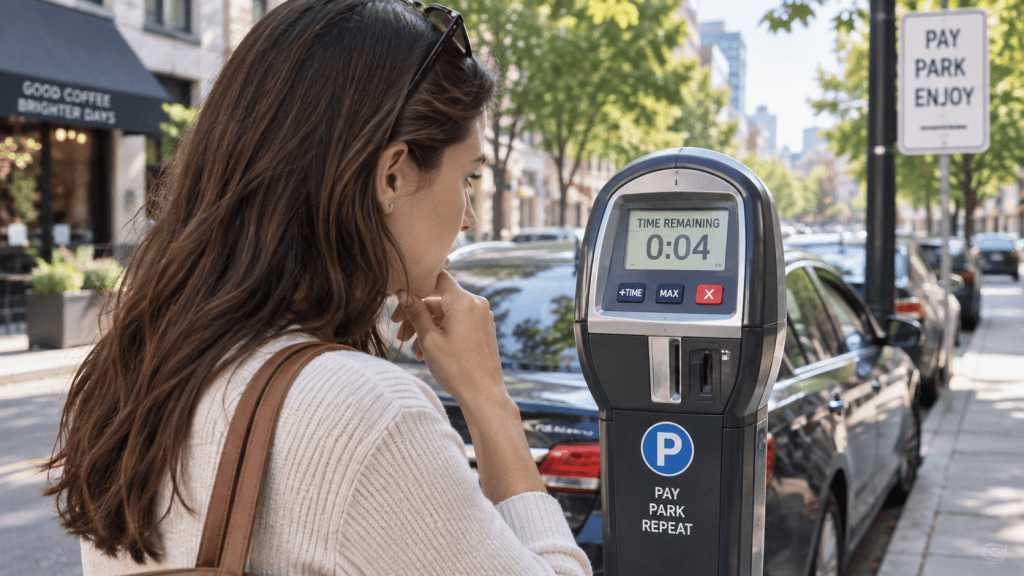
How Long Is a Parking Grace Period?
There isn’t one standard answer.
One city may give drivers a few minutes after a meter expires before a parking ticket can be issued.
Another city may expect payment immediately when you park.
A parking garage might have a completely different type of grace period that gives you time to drive out after you’ve already paid.
That’s why seeing someone online say, “You always get five minutes” doesn’t mean that rule applies where your car is parked.
“Grace Period” Can Actually Mean Different Things
This is where parking rules get confusing.
A parking grace period doesn’t always mean, “You can park free for another five or ten minutes.”
Depending on the parking system, the term can refer to several different situations.
Time to Pay After Parking
A short period after you arrive before payment must be completed.
Time After a Meter Expires
Extra time before parking enforcement can issue a citation.
Time to Exit a Garage
A short period between paying at the machine and actually driving out of the garage.
Extra Time Before Another Fee
Some parking systems may allow extra time before the next billing increment, while others do not.
Those are very different things.
A grace period that protects you from a ticket may not give you free additional parking time. A garage exit grace period may apply only after you’ve already paid. And a billing system may have no extra time at all once another charging increment begins.
Is There a Parking Meter Grace Period?
Sometimes.
A parking meter grace period is usually created by local parking rules, so it can vary from city to city.
New York City is a useful example. NYC currently gives drivers a five-minute grace period after the expiration time on a parking meter receipt or ParkNYC parking session before a parking ticket can be issued.
Example based on current NYC parking-meter guidance. Always check current local rules before relying on a grace period.
But don’t turn that into a general rule for every city.
The five-minute rule is specific to the parking regulations that apply there.
What About a Grace Period When You First Park?
That’s another place where drivers can get caught out.
You might park, walk toward the meter, answer a text, and assume you have a few minutes before payment really matters.
Don’t assume that.
Los Angeles, for example, states that there is no grace period before payment is required at a parking meter. Drivers have time to unload passengers and baggage, but meter payment is expected immediately.
Parking Garages May Use Grace Periods Differently
A garage can make the term even more confusing.
Imagine you walk to a pay station, pay your ticket, and then still need five minutes to find your car, load your bags, and drive toward the exit.
Some garages give customers a short exit period after payment so they aren’t charged again while they’re simply trying to leave.
San Francisco’s SFMTA parking-facility regulations provide a good example of how specific these rules can get. Those regulations provide an exit grace period after payment at a pay station, while also stating that there is no grace period when hourly parking has already exceeded the last full billing increment.
Same garage. Different situations.
Already paid and driving toward the exit? An exit grace period may apply.
Stayed beyond the hourly billing increment? There may be no billing grace period at all.
That’s why the wording matters.
Ask what the grace period actually applies to, not just whether the parking location “has a grace period.”
Does Paid Parking Have a Time Grace Period?
People often look for a parking time grace period because they’re only a few minutes late.
Maybe your appointment ran over. Maybe you’re already walking back to the car. Maybe the elevator in the garage took forever.
Unfortunately, being only a few minutes late doesn’t automatically create extra legal parking time.
The rule depends on the place where you parked.
What Happens When Your Parking Meter Expires?
Once your parking meter expired time is reached, one of several things may happen depending on the local rules.
There may be a short enforcement grace period.
You may be allowed to add more paid time if you haven’t reached the maximum parking limit.
Or the space may immediately become subject to enforcement once your paid session expires.
And remember: adding more time isn’t always allowed. Some spaces have maximum time limits that still apply even if you’re willing to pay more.
The Safest Approach: Don’t Plan Around the Grace Period
If your paid parking ends at 3:00 PM and you know there’s officially a five-minute grace period, it can be tempting to think:
“Great. I really have until 3:05.”
That’s not a great habit.
A grace period is better treated as a small buffer for unexpected delays, not as extra parking time you intentionally plan to use.
If you aim to return before the actual expiration time, a slow elevator, checkout line, or long walk back to the car is much less likely to become a parking problem.
Plan Before Time Runs Out
A Parking Reminder Is More Useful Than Guessing About Grace Time
You can’t control whether a city or garage gives you an extra five minutes.
You can keep a better eye on your own parking time.
A parking timer can help you remember when the session started, while a parking fee reminder gives you a heads-up before a configured parking threshold approaches.
That’s the idea behind ParkGrace.
Instead of waiting until your parking time is already over and then wondering whether there’s a grace period, you can get a reminder while there’s still time to head back.
1h 50m
10 min
Enabled
A Realistic Grace-Period Scenario
Your paid parking expires at 4:00 PM.
You’re inside a store at 3:45.
You think you’re almost done, but the checkout line moves slowly.
At 3:58, you’re still inside.
This is the point where knowing about a possible grace period isn’t nearly as useful as getting an earlier reminder.
A reminder at 3:50 gives you ten minutes to make a decision.
Waiting until 4:00 and then asking whether you get five extra minutes leaves a lot less room for error.
What to Check Before Relying on a Parking Grace Period
Parking Grace Period FAQ
Related Parking Questions
Don’t Make the Grace Period Your Parking Plan
Use ParkGrace to keep track of your parking time and get a reminder before your configured parking threshold approaches.